
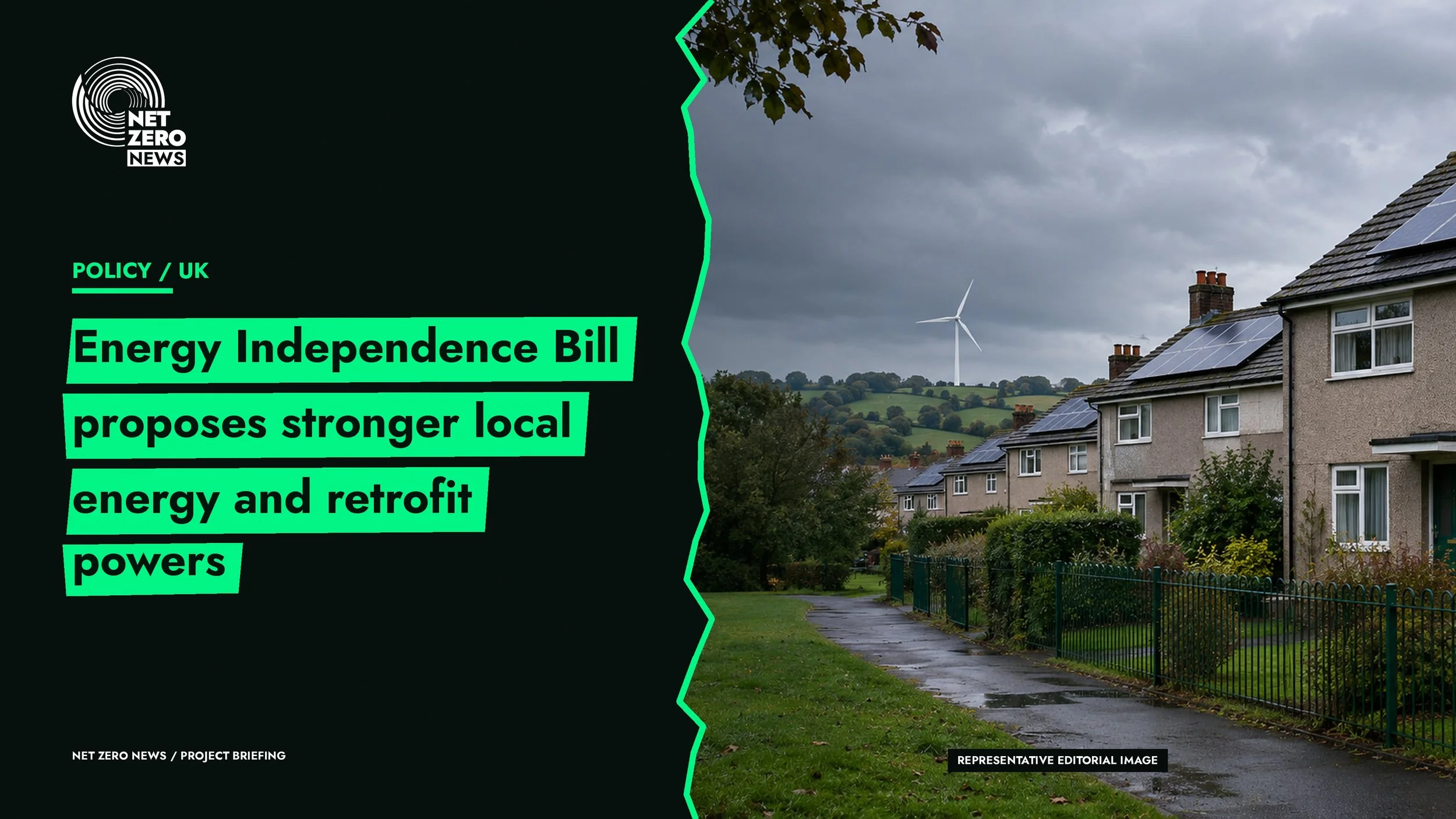
The Energy Independence Bill was introduced to Parliament on 4th November 2026, proposing changes that would affect councils, energy developers and households.
Current position
The proposals include stronger council enforcement of rented-property energy standards, a statutory basis for the Warm Homes Agency and powers supporting community benefits from renewable projects. The announcement also outlines changes affecting batteries and electricity exported to the grid. These are legislative proposals, with implementation still dependent on the parliamentary process and subsequent measures.
Why this matters
Public-sector teams can begin assessing potential effects on housing enforcement and local energy partnerships. The Bill is a new legislative milestone, separate from earlier announcements about energy bills. It does not establish that every proposed measure is already operational.
Next steps
Track the Bill and supporting regulations before changing delivery assumptions. Project business cases should retain their current cost evidence and avoid treating projected national savings as guaranteed local outcomes.
Primary source: Department for Energy Security and Net Zero, 4th November 2026.